Personal Thoughts
The G.I. Joe With One Leg
Part 1 of the thread From the journal
- Growing up without much shaped how I think about owning things. There's no getting around that.
- My first real toy was a secondhand G.I. Joe missing a leg, and he went everywhere with me.
- When one object is your whole world, you learn its weight.
- Minimalism isn't a pose for me. It's where that lesson ends up.
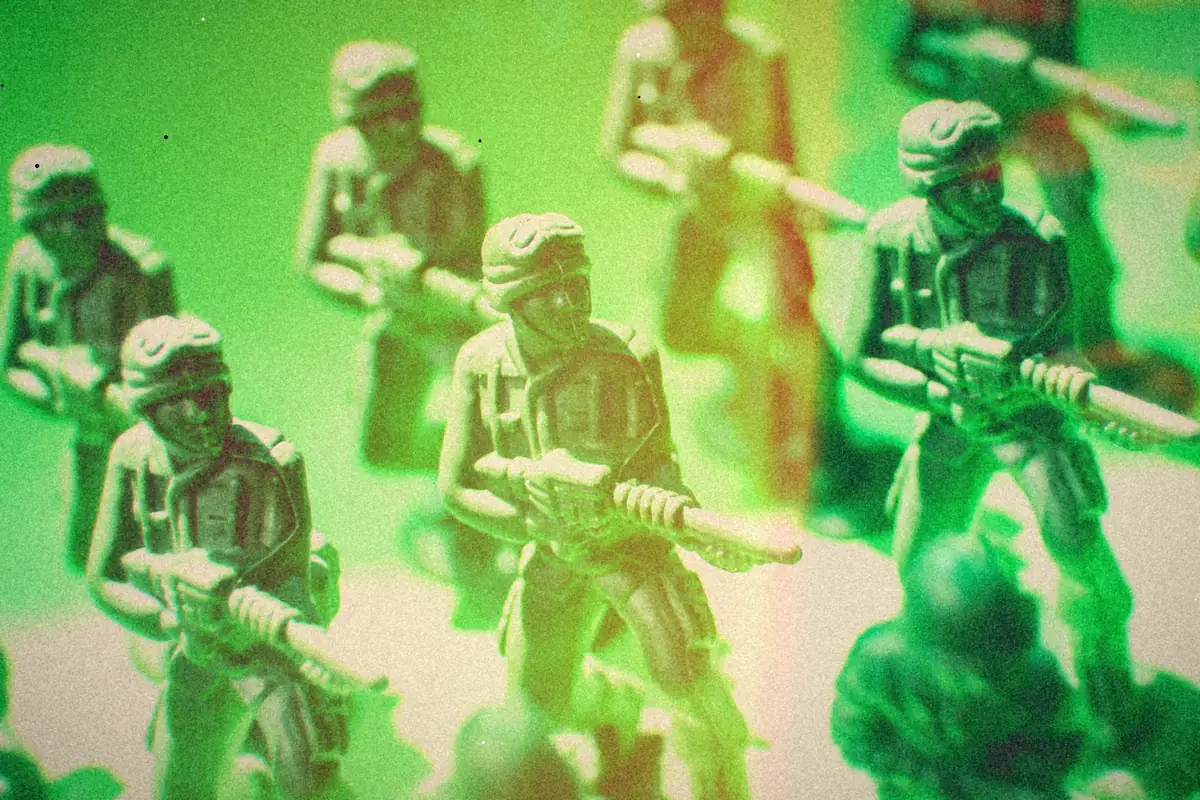
He went everywhere with me. A G.I. Joe, inherited secondhand and visibly damaged, missing a leg. That action figure was the entirety of my material wealth at the time, and his value was immense precisely because he was the only one.
I wrote about him in a journal entry back in September 2016. This is that entry, filled out a little, the same way I did with air through a car window.
Where it starts
Poverty was my primary architect. There's no escaping that foundational truth.
I can still conjure the specific anxiety of needing to steal food. Bagels, usually, small enough to hide, just to bridge the gap. It's a stark memory, and there's nothing romantic about it. It was rooted entirely in necessity.
I don't bring that up for sympathy, and I'm not trying to make it sound tougher than it was. I bring it up because it's the honest starting point. You don't get to pick what teaches you. That's what taught me.
And here's the thing about a memory like that: it isn't really about bagels. It's about the feeling of there not being enough, and of having to figure out the gap on your own. That feeling sticks around long after the gap is closed.
One thing
Contrast that with the value I placed on my first real toy.
He wasn't new. He wasn't in good shape. He had one leg. None of that mattered, because he was mine, and he was all of it. There wasn't a second figure to trade off with or a pile to dig through. There was him.
Why would a broken action figure matter that much? I think it's simple math. When you have one thing, all of your attention goes to it. You know every scuff. You notice when it's missing. It doesn't blend into the background, because there's no background for it to blend into.
This early, visceral education in scarcity versus cherished possession directly informed my adult philosophy.
It wasn't the kind of lesson you get from a lecture. It's the kind you learn the way you learn a stove is hot. Scarcity on one side, one cherished thing on the other, and the space between them was the whole lesson.
Where I landed
Minimalism isn't an affectation for me. It's the logical extension of understanding that true value is often inversely proportional to quantity.
When people hear "minimalist" they tend to picture a look: bare walls, one good chair, everything in neutral colors. That's not what I mean. I mean a way of weighing things. The more of something you have, the less any single one of them gets to mean. That's not a rule I decided on. It's something I found out the hard way, a long time before I had a word for it.
It'd be easy to spin this into something tidy, like hardship built character and I'm grateful for it. I'm not going to do that. It happened, and it left me with a clear sense of what a thing is worth, and I don't think I'd have that otherwise.
When one object constitutes your entire world, you learn its weight.
- Waiting for My Real Life to BeginPersonal Thoughts
- Air Through the Car WindowPersonal Thoughts