Book Writing
Continue?: A Teen Rom-Com Set in 1994 Seoul
Part 1 of the thread The ideas drawer
- The premise: a sixteen-year-old in 1994 Seoul can hit Continue on his own life, and he's hopeless at it.
- The rules are arcade rules: three checkpoints, and a fourth one leaves a leftover version of him behind.
- Pagers, noraebang, the brand-new college exam and a neighborhood arcade do half the work.
- The bible is locked. There are no pages yet, and the next step is the outline.
Every arcade kid in 1994 knew the screen. You get knocked out, the machine flashes CONTINUE? and counts down from nine, and you decide whether another coin is worth it. Continue? asks what happens when a sixteen-year-old can hit that button on his actual life. Then it makes him terrible at it.
It's the idea in the drawer with the most thinking behind it, so it goes first.
The premise
Kang Tae-yang is sixteen, a first-year at Sangwon High, and gloriously average. He lives with his mom in the working-class Sanggye-dong towers in northern Seoul. He finds out he can set a checkpoint in his own life and drop back to it later with his memory intact while everything else resets.
He doesn't go after lottery numbers. He's sixteen. He spends it on Yoon So-ra, the sharp, funny girl at the top of the class he can't talk to without short-circuiting. He reloads the first hello, the note passed in homeroom, the date, and every "perfect" redo invents a dumber disaster than the last one. The joke underneath the whole thing: you can't speedrun being genuine. The more he optimizes, the more clearly she sees through him.
The rules
It's arcade logic, and I kept it tight on purpose, because every limit pays off later.
| Rule | How it works |
|---|---|
| The ritual | He sets a checkpoint by slamming a button with intent. First the worn red plunger under a King of Fighters '94 cabinet, later a Game Boy start button, a payphone key, a crosswalk button. |
| The reload | He keeps what he learned, never what he gained. There's nothing to farm. |
| Three credits | He can hold three checkpoints. Set a fourth and the oldest doesn't clear. It leaves a leftover Tae-yang behind. |
| The lag | Every continue makes the world stutter for half a second. Other people feel it as déjà vu. Overdo it and he gets nosebleeds. |
| No-continue zones | The suneung, the national college exam, won't take a coin. The one day that decides his future has to be cleared on the first try. |
That third rule is the engine. Burn one checkpoint too many and an old version of him walks out of a timeline he thought he'd erased. By the end there are several Tae-yangs loose in Seoul at once, each sure he's the real one.
The people and the place
Baek Doo-shik is the best friend and the only one he tells: terrible advice, fierce loyalty. His mom works two jobs and pins everything on that exam. Mr. Goo runs the neighborhood arcade, Cosmos Arcade, and hands out the rules in cryptic one-liners over a cigarette and a paper cup of coffee.
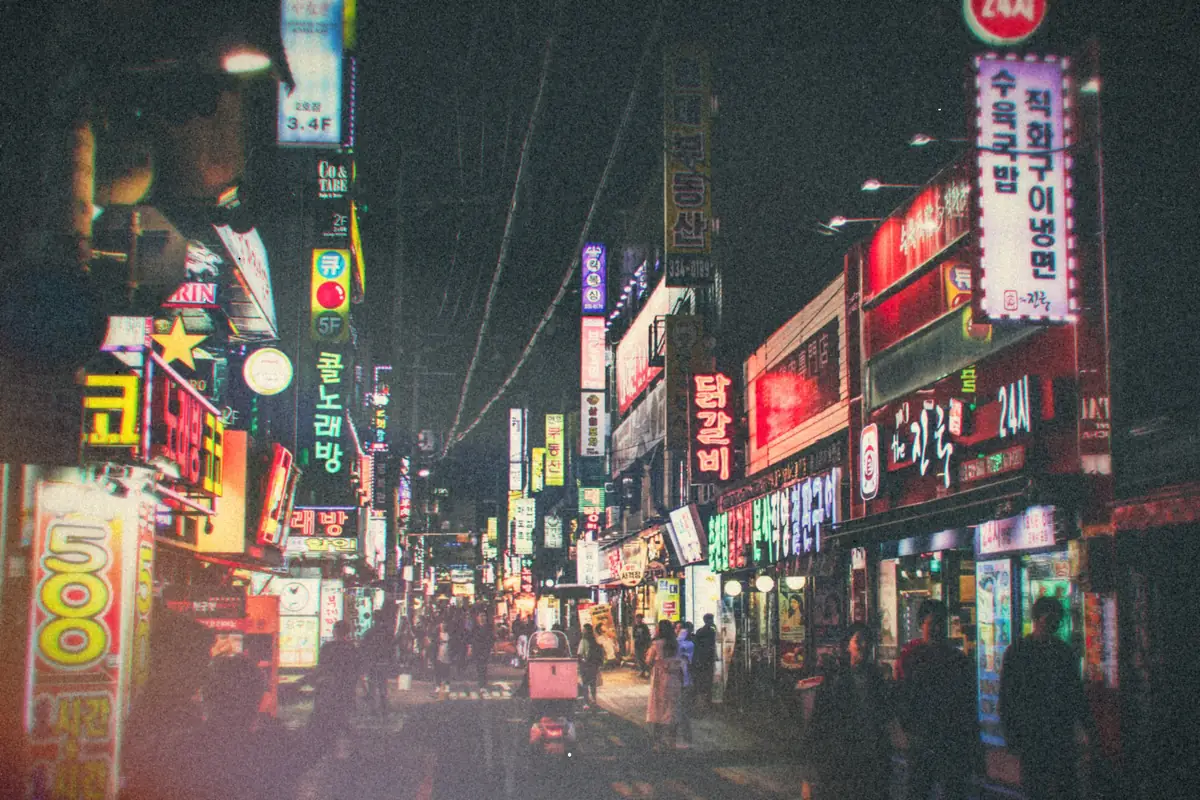
And then 1994 itself. Pagers and payphones, with number codes punched in (8282 for "hurry-hurry", 1004 for "angel"). Tteokbokki from the snack shop, the subway to the Han River for the big date, a shared Walkman with one earbud each. It's meant to be very Korean and still read cleanly for an American reader.
Why I think it works
The mechanic is the metaphor. Hitting Continue is avoidance with extra steps, and growing up is playing without a coin. His mom says it best over breakfast, with no idea it's literally true for him: "You only get one shot at being young."
It's the comic cousin of When I Was Old, another man who can't stop redoing his life, played for tears instead of laughs.
The comps: About Time and Palm Springs for the loop, Reply 1994 for the era. Except this hero is the worst player alive.
Where it stands
It's a story bibleThe reference document behind a story: characters, rules, places and timeline, kept so the details stay straight., finished this June and marked canon-locked: the names, the neighborhood, the three-credit rule, the leftover selves and the finale are all fixed. There's a list of signature scenes, like a confession reloaded until it's word-perfect and completely dead.
There are no pages. The bible's own last line says the next step is outline to script, and the format is still open. The notes say it could work as a webtoonA comic built to scroll vertically on a phone. The format took off in South Korea., an animated film or a short drama series.
Note
The bible has the rules and the set pieces. What it doesn't have yet is the order they go in.
Update: this one has a working page now, and the chapters will show up there as I write them: Continue?.